I didn't know what to make of this movie, and even know it is the most enigmatic of the group. Hearing Kip explain the background of Ingmar Bergman helped set the tone, and I think that Bergman's personal search really came across in the story. There's a kind of desperation to the film, which is wholly appropriate considering the title. And the blend of characters really shows the array of responses that people can have to death and God. I had a hard time digesting the title, because the film really doesn't seem to be an apocalyptic piece but perhaps there is more to it than I remember now.
The image of playing chess with Death is really fascinating; actually, everything about Death in this film is fascinating. He is given his own form and movement, and is much more of an active participant than a disinterested bystander. I laughed out loud when he cut the tree that the clown was hiding in. Doesn't that seem like cheating? I point that came across to me is that the actual event of our death is really irrelevant. We can put it off for a time, but eventually the pale-faced man in black will come to do his job.
As I mentioned, Bergman really does a great job displaying a variety of different characters and personalities. The knight plays a central role because he is caught between faith and apostasy. The tragedy is that there is no real resolution to his quest, he is cut short before he is able to answer the question that hounds him. Many of the others were able to face death head on, but who really made the better choice? Is their confidence misplaced? We can never answer this question.
The primary question within Christianity is whether faith can overcome the nagging doubts that persist throughout our lives. Both the apostate and the believer have a faith of some sort. I have come to believe that nothing related to the spiritual can be known with absolute assurance, but at some point a decision must be made.
Sunday, November 30, 2008

Friday, November 28, 2008
amy: The Name of the Rose
Oh my. I must blog about The Name of the Rose in relation to our classes. Thank goodness that this is not a film writing course because I think I could say quite a bit about the title and the "romance" in the story.
Putting aside my prejudice, I really enjoyed watching the film in context of the medieval time period. I find that movies have the ability to take learned ideas and, if they are well done, put them into a coherent visual picture. It helps greatly in the learning process.
In the Name of the Rose, I am able to see the downfall of the medieval picture of life, which was essentially existence with almost too clear a meaning. From a modern worldview, I never pictured this "classic education" to be as stifling as it now seems. The movie shows that there needs to be meaning in life, for it does not condemn the faith of the genuine priests. Yet at the same time, this faith needs to follow the logical and "modern worldview," because a faith must not contradict the facts of life if it is truth. I think William of Baskerville represents this balance of extreme compliance without exploration and extreme modernity without meaning.
The books in the movie also tied in with our class discussions of how books were made during the medieval time period. I have always been a bibliophile, so the fact that each book had its own character through handwriting makes it all the more precious. The Name of the Rose really put the emphasis on the beauty and importance of books. The labyrinth of knowledge was such a beautiful depiction of the man truly searching for knowledge. Overall, I received an important insight into the trials of Medieval life and the difficulty a scholar would have to struggle against in his pursuit of truth. Not to mention the difficulties each artist would face in the stifling lack of creativity.
Putting aside my prejudice, I really enjoyed watching the film in context of the medieval time period. I find that movies have the ability to take learned ideas and, if they are well done, put them into a coherent visual picture. It helps greatly in the learning process.
In the Name of the Rose, I am able to see the downfall of the medieval picture of life, which was essentially existence with almost too clear a meaning. From a modern worldview, I never pictured this "classic education" to be as stifling as it now seems. The movie shows that there needs to be meaning in life, for it does not condemn the faith of the genuine priests. Yet at the same time, this faith needs to follow the logical and "modern worldview," because a faith must not contradict the facts of life if it is truth. I think William of Baskerville represents this balance of extreme compliance without exploration and extreme modernity without meaning.
The books in the movie also tied in with our class discussions of how books were made during the medieval time period. I have always been a bibliophile, so the fact that each book had its own character through handwriting makes it all the more precious. The Name of the Rose really put the emphasis on the beauty and importance of books. The labyrinth of knowledge was such a beautiful depiction of the man truly searching for knowledge. Overall, I received an important insight into the trials of Medieval life and the difficulty a scholar would have to struggle against in his pursuit of truth. Not to mention the difficulties each artist would face in the stifling lack of creativity.
Saturday, November 22, 2008
A Tall Tale
Garrett Lambur
Upon watching Pan’s Labyrinth in class I was blown away by the reactions the film got having seen it before and, yes, I did react but they were all staged. I had forgotten how much fun one could have seeing a film before watching it within a group setting such as that one. But I digress from the most intriguing question I got from the movie. Was the fairy tale straight from the girl’s head or was it real?
This is more of an opinion question but I feel that the answer may have significant impact upon my own beliefs. For instance if I start to doubt this fairy tale then do I have to start doubting Santa? That may sound satirical but I assure you it is not for my belief in Santa is something that I do take seriously. Every Christmas there are still presents from Santa under the tree and I realize that they are not from Santa but from my parents or relatives. It is not the present themselves but the idea behind the presents, the underlying meaning. I am not going to dissect this meaning but continue upon the impact of the answer to the stated question. If I decide it was real than many other fairy tale characters such as Santa solidify themselves and their impact within my world. But if I decide that there was no real fairy tale then the impact of the all fairy tales begins to lessen, including the lessons that many of those tales teach us in life.
In class we discuss the ability of myth to impact a human life. Yet in order for this impact to truly be felt there has to be some part of you that believes in the myth. If you discount the entire myth as fibble fabble then how much will you allow the lessons within the myth to impact you? As idyllic as it is look at the movie Tall Tale (way back in ’95) where the young boy Daniel lives a mythic tale that represents a real life fight he is engaged in. The ending blurs the line between the mythic characters and real life but is this not how lessons from myth are passed on. Without any belief in the myth Daniel may never have had the courage to fight for his farm because he would have thought the myth was fictitious and none of it applied to his current day situation.
As such I have to answer my question that the fairy tale within Pan’s Labyrinth was real. Now some may think this stupid because hey, it’s a movie, of course it can’t be real but it’s not the fact its real it’s the ability to believe in the fairy tale. Believing in a fairy tale allows it to help you develop your own beliefs along with helping to solidify any other beliefs not related to that fairy tale. By believing something that others may not you establish your own beliefs because without beliefs a man loses the ability to be an individual.
Upon watching Pan’s Labyrinth in class I was blown away by the reactions the film got having seen it before and, yes, I did react but they were all staged. I had forgotten how much fun one could have seeing a film before watching it within a group setting such as that one. But I digress from the most intriguing question I got from the movie. Was the fairy tale straight from the girl’s head or was it real?
This is more of an opinion question but I feel that the answer may have significant impact upon my own beliefs. For instance if I start to doubt this fairy tale then do I have to start doubting Santa? That may sound satirical but I assure you it is not for my belief in Santa is something that I do take seriously. Every Christmas there are still presents from Santa under the tree and I realize that they are not from Santa but from my parents or relatives. It is not the present themselves but the idea behind the presents, the underlying meaning. I am not going to dissect this meaning but continue upon the impact of the answer to the stated question. If I decide it was real than many other fairy tale characters such as Santa solidify themselves and their impact within my world. But if I decide that there was no real fairy tale then the impact of the all fairy tales begins to lessen, including the lessons that many of those tales teach us in life.
In class we discuss the ability of myth to impact a human life. Yet in order for this impact to truly be felt there has to be some part of you that believes in the myth. If you discount the entire myth as fibble fabble then how much will you allow the lessons within the myth to impact you? As idyllic as it is look at the movie Tall Tale (way back in ’95) where the young boy Daniel lives a mythic tale that represents a real life fight he is engaged in. The ending blurs the line between the mythic characters and real life but is this not how lessons from myth are passed on. Without any belief in the myth Daniel may never have had the courage to fight for his farm because he would have thought the myth was fictitious and none of it applied to his current day situation.
As such I have to answer my question that the fairy tale within Pan’s Labyrinth was real. Now some may think this stupid because hey, it’s a movie, of course it can’t be real but it’s not the fact its real it’s the ability to believe in the fairy tale. Believing in a fairy tale allows it to help you develop your own beliefs along with helping to solidify any other beliefs not related to that fairy tale. By believing something that others may not you establish your own beliefs because without beliefs a man loses the ability to be an individual.
Thursday, November 20, 2008
Vanilla Sky - AHB
"I looked like Tom Cruise on Vanilla Sky, it was televised . . ." - Kanye West
He may be the most fun Hollywood actor to hate on (I mean Keanu Reeves just gets old), but there is something undeniable about Tom Cruise's talent/whatever you want to call it. I thoroughly enjoyed Vanilla Sky, and it is rare that I feel this way about a sci-fi-esque film. Cameron Crowe movies generally score pretty high with me, and this was definitely not an exception.
A lot could be written about the portrayal of different interactions of love and friendship in this film; Cruise's character, David, is like the prototype of "I-it" relationships. He has no understanding of people's value apart from what the help him achieve (. . . 4 times). He is a publishing mega-mogul whose entire job is packaging and promoting an image, and eventually this takes over his personal life as well. Therefore, it is interesting that the car accident did more damage to his face than anywhere else. It is funny that disfigurement in the physical sense is so much easier to recognize than that of the soul, which is infinitely more important. Justin and I were having a conversation the other day about confronting personal failings. We were largely in agreement that there is little more disappointing than someone who either cannot recognize or chooses to ignore his or her weaknesses. Eventually those things will, and their destructive power is terrible. By the time David was ready to confront himself, due to his meeting with Sofia, the consequences of his actions had already been put in motion and it was too late.
Publishing and packaging is only as good as the product inside.
"Hell hath no fury like a Cameron Diaz scorned."
He may be the most fun Hollywood actor to hate on (I mean Keanu Reeves just gets old), but there is something undeniable about Tom Cruise's talent/whatever you want to call it. I thoroughly enjoyed Vanilla Sky, and it is rare that I feel this way about a sci-fi-esque film. Cameron Crowe movies generally score pretty high with me, and this was definitely not an exception.
A lot could be written about the portrayal of different interactions of love and friendship in this film; Cruise's character, David, is like the prototype of "I-it" relationships. He has no understanding of people's value apart from what the help him achieve (. . . 4 times). He is a publishing mega-mogul whose entire job is packaging and promoting an image, and eventually this takes over his personal life as well. Therefore, it is interesting that the car accident did more damage to his face than anywhere else. It is funny that disfigurement in the physical sense is so much easier to recognize than that of the soul, which is infinitely more important. Justin and I were having a conversation the other day about confronting personal failings. We were largely in agreement that there is little more disappointing than someone who either cannot recognize or chooses to ignore his or her weaknesses. Eventually those things will, and their destructive power is terrible. By the time David was ready to confront himself, due to his meeting with Sofia, the consequences of his actions had already been put in motion and it was too late.
Publishing and packaging is only as good as the product inside.
"Hell hath no fury like a Cameron Diaz scorned."
Pan's Labyrinth - AHB
I really didn't want to analyze this film, and even now I'm unsure whether or not it is worth it. Pan's Labyrinth is an excellent film. Everything from the script to the costumes pulls me right into that world; yet there is something unsettling about the movie. This is the second time I've watched it and come away plagued by this strange sensation - this movie may define the term "haunting" in relation to film (fittingly, I decided to turn on the Donnie Darko soundtrack while I write this).
Pan's Labyrinth is a fairytale; that is its first and most unique aspect. I think that we often disregard fairytales as juvenile or childish, just like Ofelia's mother did. One of the things I've learned this semester is that symbolism can become an incredibly meaningful part of my life, and the symbol has a transformative power, even if I fail to properly uncover the meaning of it.
The faun is an unsettling character. Throughout the film I am always questioning his motives and actions. He is Ofelia's only guide and connection to the Underworld where her spirit belongs, but yet he cannot be entirely trusted. But is that really so strange? Perhaps it is only a poor teacher that is honest with you. Relating this back to Christianity, there are a lot of examples of Christ testing his followers and allowing their failure to occur as a means of instruction. In the third and final task Pan tells Ofelia that she must give up her brother in order to complete her journey. Her refusal is a rejection of the Faun's word as authoritative, but it ends up being the right choice. Ofelia's brave decision reminds me of a quote by Ralph Waldo Emerson from the essay, "Self-Reliance": "Trust thyself: every heart vibrates to that iron string". The Faun had to test Ofelia to discover whether her soul still retained part of its original divinity.
Pan's Labyrinth is a fairytale; that is its first and most unique aspect. I think that we often disregard fairytales as juvenile or childish, just like Ofelia's mother did. One of the things I've learned this semester is that symbolism can become an incredibly meaningful part of my life, and the symbol has a transformative power, even if I fail to properly uncover the meaning of it.
The faun is an unsettling character. Throughout the film I am always questioning his motives and actions. He is Ofelia's only guide and connection to the Underworld where her spirit belongs, but yet he cannot be entirely trusted. But is that really so strange? Perhaps it is only a poor teacher that is honest with you. Relating this back to Christianity, there are a lot of examples of Christ testing his followers and allowing their failure to occur as a means of instruction. In the third and final task Pan tells Ofelia that she must give up her brother in order to complete her journey. Her refusal is a rejection of the Faun's word as authoritative, but it ends up being the right choice. Ofelia's brave decision reminds me of a quote by Ralph Waldo Emerson from the essay, "Self-Reliance": "Trust thyself: every heart vibrates to that iron string". The Faun had to test Ofelia to discover whether her soul still retained part of its original divinity.
Wednesday, November 19, 2008
Yellow VW Bus
Our Little Yellow VW Bus
Garrett Lambur
On Sunday night I watched Little Miss Sunshine with Kip Redick and family after my 6am night spent with Brookelynn to celebrate her birthday. I was feeling quite sick at the time and was unsure whether I would truly enjoy the movie. I am quite sure that will never be the case with the movie. I absolutely love the movie. My favorite character in the movie would have to be the VW van. Yes, I said the Van, not the little girl or the silent brother or the crack dealing grandfather, the Van. It was the trip in the van across the desert that brought the family together. The fan allowed them to communicate with each other in a way they hadn’t done before. I thought this fitting since the title of our class is sacred communication. They aren’t communicating with the holy other but they are communicating with each other as a family, which I view as sacred.
While we weren’t able to watch the whole movie for class since it is not European I still felt a connection between it and the other movies we have watched. Unlike a typical American film, this film pushes all barriers and crosses all lines. There is nothing that is even close to off limits. Although the movies we are watching in class have not been comical they have pushed the limits and made the viewer look at things in a new light. Little Miss Sunshine does the same thing but looks directly at the typical dysfunctional American family. By the end you begin to realize that all families are dysfunctional but it’s when they come together that they are able to function. And what was it that allowed the family to communicate and function together? Yep, you got it, the Van.
In fact you could draw parallels between that Van and its family and IBTS and our group. We are a completely dysfunctional group: we get on each other’s nerves, we fight amongst ourselves, we are completely different but it is IBTS that allows us to function together. The close proximity of living together with the significant lack of typical living supplies, not to mention the language barrier/inability to decipher labels/instructions, have made us come together as a group to function in this messed up European living situation. Although there may not be a wailing horn or a push start every time to get going there are lady bugs infestations and yelling people down below. So next time you think of IBTS just imagine it as a yellow VW Bus and laugh to yourself at how it brings us together and allows for communication among us that might never have happened otherwise.
On Sunday night I watched Little Miss Sunshine with Kip Redick and family after my 6am night spent with Brookelynn to celebrate her birthday. I was feeling quite sick at the time and was unsure whether I would truly enjoy the movie. I am quite sure that will never be the case with the movie. I absolutely love the movie. My favorite character in the movie would have to be the VW van. Yes, I said the Van, not the little girl or the silent brother or the crack dealing grandfather, the Van. It was the trip in the van across the desert that brought the family together. The fan allowed them to communicate with each other in a way they hadn’t done before. I thought this fitting since the title of our class is sacred communication. They aren’t communicating with the holy other but they are communicating with each other as a family, which I view as sacred.
While we weren’t able to watch the whole movie for class since it is not European I still felt a connection between it and the other movies we have watched. Unlike a typical American film, this film pushes all barriers and crosses all lines. There is nothing that is even close to off limits. Although the movies we are watching in class have not been comical they have pushed the limits and made the viewer look at things in a new light. Little Miss Sunshine does the same thing but looks directly at the typical dysfunctional American family. By the end you begin to realize that all families are dysfunctional but it’s when they come together that they are able to function. And what was it that allowed the family to communicate and function together? Yep, you got it, the Van.
In fact you could draw parallels between that Van and its family and IBTS and our group. We are a completely dysfunctional group: we get on each other’s nerves, we fight amongst ourselves, we are completely different but it is IBTS that allows us to function together. The close proximity of living together with the significant lack of typical living supplies, not to mention the language barrier/inability to decipher labels/instructions, have made us come together as a group to function in this messed up European living situation. Although there may not be a wailing horn or a push start every time to get going there are lady bugs infestations and yelling people down below. So next time you think of IBTS just imagine it as a yellow VW Bus and laugh to yourself at how it brings us together and allows for communication among us that might never have happened otherwise.
SEX
Garrett Lambur
The sixth installment in the Decalogue series was quite interesting. Involving the boy and his habit of watching the woman through the telescope and the ever sexually active woman. It addressed the commandment of though shalt not commit adultery in a different manner. The woman had all of these superficial sexual relationships with none seen in the movie being based upon any sort of real love. Even when the boy meets her and goes back to her place, she proceeds to attempt to show him all that love consists of is physical reactions. Yet soon after this she realizes that she has actual feelings for the boy but by this time it’s too late. I thought this was a great way to address the idea of adultery, in the sense of the film superfluous sex.
On the note of superfluous sex it seems that our generation is obsessed with it. We have become labeled the “hook-up” generation, where sex has become the goal for the end of a night: male and female alike attempt to find someone and by the end of the night have meaningless sex. I label it meaningless because there is no relationship before hand or in most cases afterwards that brings any deep feelings to the sex. The sex becomes something of pure pleasure. Now this may not always be a bad thing but it tends to take away from any meaning that sex with a true mate may have in the future. Sex can be the ultimate sign of love between two people but sex must treated with respect in order for this to be achieved. Similarly, sex should be something within a relationship only after both sides have recognized strong feelings for the other. What exactly is meant by strong feelings has to be weighed by each side, as there will never be a specific definition for what strong feelings of love are. Part of maturing in relationships is being able to recognize these within yourself. I do not feel that marriage is necessary before sex though some may.
I do not feel that sex must be feared though the possible consequences should be unless you are ready. I also do not agree with anyone that labels sex as evil. Sex is a natural connection between two human beings. It used to be basic but as civilization has progressed so has our treatment of sex. Sex has become complex and within the United States it can be a taboo topic. By making it into a taboo topic it can create a fear of sex when there shouldn’t be any, only respect.
I realize that I went semi off topic but I felt that the Decalogue here addresses that idea of superfluous sex well. Although neither character was married I found connection between adultery and superfluous sex though adultery may not always be meaningless. Kieslowski adapted the simple meaning of adultery to the more modern and complex situation in which it might apply. The commandment today may no longer be though shalt not commit adultery but rather though shalt not go around sleeping with every person in a meaningless relationship, o, and not commit adultery too.
The sixth installment in the Decalogue series was quite interesting. Involving the boy and his habit of watching the woman through the telescope and the ever sexually active woman. It addressed the commandment of though shalt not commit adultery in a different manner. The woman had all of these superficial sexual relationships with none seen in the movie being based upon any sort of real love. Even when the boy meets her and goes back to her place, she proceeds to attempt to show him all that love consists of is physical reactions. Yet soon after this she realizes that she has actual feelings for the boy but by this time it’s too late. I thought this was a great way to address the idea of adultery, in the sense of the film superfluous sex.
On the note of superfluous sex it seems that our generation is obsessed with it. We have become labeled the “hook-up” generation, where sex has become the goal for the end of a night: male and female alike attempt to find someone and by the end of the night have meaningless sex. I label it meaningless because there is no relationship before hand or in most cases afterwards that brings any deep feelings to the sex. The sex becomes something of pure pleasure. Now this may not always be a bad thing but it tends to take away from any meaning that sex with a true mate may have in the future. Sex can be the ultimate sign of love between two people but sex must treated with respect in order for this to be achieved. Similarly, sex should be something within a relationship only after both sides have recognized strong feelings for the other. What exactly is meant by strong feelings has to be weighed by each side, as there will never be a specific definition for what strong feelings of love are. Part of maturing in relationships is being able to recognize these within yourself. I do not feel that marriage is necessary before sex though some may.
I do not feel that sex must be feared though the possible consequences should be unless you are ready. I also do not agree with anyone that labels sex as evil. Sex is a natural connection between two human beings. It used to be basic but as civilization has progressed so has our treatment of sex. Sex has become complex and within the United States it can be a taboo topic. By making it into a taboo topic it can create a fear of sex when there shouldn’t be any, only respect.
I realize that I went semi off topic but I felt that the Decalogue here addresses that idea of superfluous sex well. Although neither character was married I found connection between adultery and superfluous sex though adultery may not always be meaningless. Kieslowski adapted the simple meaning of adultery to the more modern and complex situation in which it might apply. The commandment today may no longer be though shalt not commit adultery but rather though shalt not go around sleeping with every person in a meaningless relationship, o, and not commit adultery too.
Garrett Lambur
Though Shalt Not Kill
In perhaps the most interesting class discussion we have had so far there were different viewpoints upon whether or not the state had the power to take the life of one of its citizens. It certainly added flair that the daughter was arguing on the opposite side of the father. But there was something that we did not cover during the discussion that has had me thinking. The commandment is not limited to capital punishment or murder though that is where the discussion was centered and limited to, so what becomes of a soldier in war? They are ordered by another to take someone else’s life, breaking this commandment. It could be argued that the soldier is fighting in self-defense and this would be true when the soldier is say defending his homeland or himself against an aggressor. But what about when a soldier is involved in an aggressive maneuver or invasion? The self-defense argument falls apart. True, the soldier may not want to take the life of others but he knew upon entering the military that he might have to (This does not apply to drafted members). So it boils down to the soldier took the life of another not in self defense, what happens now?
Is the soldier evil? Well that may entirely depend upon the person who is looking at the soldier. If you are a citizen of the soldiers country than you don’t see the soldier as evil but if you are a citizen of the country he attacked then the soldier inherently becomes evil. But the soldier did not make the decision to attack that particular hill where he killed another human being, a commanding officer did. Does this take the responsibility away from the soldier even though the commanding officer himself did not pull the trigger? Perhaps all responsibility should be taken away from the military and placed upon the country that or individual that started the conflict? Yet coming back to the commandment, it specifically states, though shalt not kill and yet the soldier killed another human being. Will the soldier be held accountable in the afterlife for breaking this commandment or can it be justified that he took a life? Say the soldier is a good human being in every other aspect of his life except for this one issue, do the other factors outweigh this act? There are just so many questions surrounding the soldier and his taking of another human life but it seems to boil down to one question to which I have discernable answer. Is the soldier evil?
Though Shalt Not Kill
In perhaps the most interesting class discussion we have had so far there were different viewpoints upon whether or not the state had the power to take the life of one of its citizens. It certainly added flair that the daughter was arguing on the opposite side of the father. But there was something that we did not cover during the discussion that has had me thinking. The commandment is not limited to capital punishment or murder though that is where the discussion was centered and limited to, so what becomes of a soldier in war? They are ordered by another to take someone else’s life, breaking this commandment. It could be argued that the soldier is fighting in self-defense and this would be true when the soldier is say defending his homeland or himself against an aggressor. But what about when a soldier is involved in an aggressive maneuver or invasion? The self-defense argument falls apart. True, the soldier may not want to take the life of others but he knew upon entering the military that he might have to (This does not apply to drafted members). So it boils down to the soldier took the life of another not in self defense, what happens now?
Is the soldier evil? Well that may entirely depend upon the person who is looking at the soldier. If you are a citizen of the soldiers country than you don’t see the soldier as evil but if you are a citizen of the country he attacked then the soldier inherently becomes evil. But the soldier did not make the decision to attack that particular hill where he killed another human being, a commanding officer did. Does this take the responsibility away from the soldier even though the commanding officer himself did not pull the trigger? Perhaps all responsibility should be taken away from the military and placed upon the country that or individual that started the conflict? Yet coming back to the commandment, it specifically states, though shalt not kill and yet the soldier killed another human being. Will the soldier be held accountable in the afterlife for breaking this commandment or can it be justified that he took a life? Say the soldier is a good human being in every other aspect of his life except for this one issue, do the other factors outweigh this act? There are just so many questions surrounding the soldier and his taking of another human life but it seems to boil down to one question to which I have discernable answer. Is the soldier evil?
Decalogue Three
Garrett Lambur
In the third Decalogue film, the commandment being addressed is remember the Sabbath day, keep it holy. This seems as if it could be a pretty easy commandment to follow, just keep your Sabbath day, be it Saturday, Sunday or whatever day as a respect toward God. Well the Decalogue takes place on the holiest of holy day’s, Christmas. A taxi driver takes his ex around looking for her husband. As we know, the husband ends up being a fake himself who had left her sometime before and she had set up the escapades of the night to keep the taxi river with her. Yet there is a twist thrown into the mix, at the end she states that if she had spent the time alone or if he had left before a certain time she would have swallowed these pills and committed suicide. Without this possible loss of life than the taxi driver spending the night away from his family justifiably could be seen as breaking the Sabbath. But as the taxi driver saves the woman’s life, albeit in a twisted and backwards way, shouldn’t he be allowed to break the Sabbath? Can there ever be a situation where one is allowed to break the Commandments?
People can almost always come up with justification for breaking laws in real life, “I didn’t make the law, why should I follow it?” or “The law is unfair thus should not be followed.” But how many people can come up with justification for breaking rules supposedly set down by an ultimate higher being, the creator of life. Those who do not believe in God could easily dismiss the Commandments saying they should only apply to believers or followers of Christianity. This may be true, but many of the commandments are guidelines that if followed make life easier and happier for many. For the religious it is much easier, the commandments are the word of God, the laws given unto the people that they must follow. But in order to help everyone, as is shown in the film, sometimes it is necessary to set aside a law in order to fight a greater evil. The man set aside his family, although for possibly the wrong reasons, to help this woman find her husband. His action in the end helped to save her life. Setting aside the law to fight a greater evil does not mean setting aside what you believe in because as soon as this is set aside then you can no longer separate good from evil. Your beliefs allow you to create a scale upon which to judge good versus evil. Thus there may be situations that present themselves where in order to fight or save someone you must set aside the law or rather commandment.
Garrett Lambur
In the third Decalogue film, the commandment being addressed is remember the Sabbath day, keep it holy. This seems as if it could be a pretty easy commandment to follow, just keep your Sabbath day, be it Saturday, Sunday or whatever day as a respect toward God. Well the Decalogue takes place on the holiest of holy day’s, Christmas. A taxi driver takes his ex around looking for her husband. As we know, the husband ends up being a fake himself who had left her sometime before and she had set up the escapades of the night to keep the taxi river with her. Yet there is a twist thrown into the mix, at the end she states that if she had spent the time alone or if he had left before a certain time she would have swallowed these pills and committed suicide. Without this possible loss of life than the taxi driver spending the night away from his family justifiably could be seen as breaking the Sabbath. But as the taxi driver saves the woman’s life, albeit in a twisted and backwards way, shouldn’t he be allowed to break the Sabbath? Can there ever be a situation where one is allowed to break the Commandments?
People can almost always come up with justification for breaking laws in real life, “I didn’t make the law, why should I follow it?” or “The law is unfair thus should not be followed.” But how many people can come up with justification for breaking rules supposedly set down by an ultimate higher being, the creator of life. Those who do not believe in God could easily dismiss the Commandments saying they should only apply to believers or followers of Christianity. This may be true, but many of the commandments are guidelines that if followed make life easier and happier for many. For the religious it is much easier, the commandments are the word of God, the laws given unto the people that they must follow. But in order to help everyone, as is shown in the film, sometimes it is necessary to set aside a law in order to fight a greater evil. The man set aside his family, although for possibly the wrong reasons, to help this woman find her husband. His action in the end helped to save her life. Setting aside the law to fight a greater evil does not mean setting aside what you believe in because as soon as this is set aside then you can no longer separate good from evil. Your beliefs allow you to create a scale upon which to judge good versus evil. Thus there may be situations that present themselves where in order to fight or save someone you must set aside the law or rather commandment.
Tuesday, November 18, 2008
The Name of the Rose - AHB
 Nobody expects the Spanish Inquisition! Well, except for Sean Connery; he is always a step ahead of the game.
The Name of the Rose was a lot of fun to watch after many of the other movies we've done. It was done more in the mold of a typical Hollywood-style film, making it easy to follow and enjoy. There were a few times when you couldn't quite take it at serious as the Director wanted (It's a bit hard to be afraid of a man named Gooey) but in other ways the film was well crafted and it flowed particularly well, despite the presence of Christian Slater!
There were a lot of great lines in the film. I'm having a fun going through the imdb page for the movie. This exchange is particularly interesting both in itself and for the plot of the movie:
William of Baskerville: My venerable brother, there are many books that speak of comedy. Why does this one fill you with such fear?
Jorge de Burgos: Because it's by Aristotle.
William of Baskerville: But what is so alarming about laughter?
Jorge de Burgos: Laughter kills fear, and without fear there can be no faith because without fear of the Devil, there is no more need of God.
William of Baskerville: But you will not eliminate laughter by eliminating that book.
Jorge de Burgos: No, to be sure, laughter will remain the common man's recreation. But what will happen if, because of this book, learned men were to pronounce it admissible to laugh at everything? Can we laugh at God? The world would relapse into chaos! Therefore, I seal that which was not to be said. In the tomb I become.
I recently read Milan Kundera's work "The Book of Laughter and Forgetting", which had this same theme of laughter being tied to the devil. I'll try not to get too off topic with this but it is quite interesting.
"Angels are partisans not of Good but of divine creation. The devil, on the other hand, is the one who refuses to grant any rational meaning to that divinely created world. . .If there were too much incontestable meaning in the world (the angels' power), man would succumb under its weight. If the world were to lose all its meaning (the devils' reign), we could not live either. Things deprived suddenly of their supposed meaning, of the place assigned to them in the so-called order of things, make us laugh. In origin, laughter is thus of the devil's domain. It has something malicious about it (things suddenly turning out different from what they pretended to be, letting us live more freely, no longer oppressing us with their austere seriousness)."
I don't know what Aristotle would have said about comedy, but I do enjoy Kundera's description. Comedy has always meant the ability to satire the "untouchable" topics in life. Take Monty Python's Inquisitor skit (or any of their stuff for that matter), here they take the most ignoble period in Catholic history and make it a profoundly funny joke. I wonder sometimes if God laughs at my irreverent jokes; if not She is gotta be pretty pissed off by now. But how poor, lonely, and miserable would life be without the ability to mock the "order" of the world, because without this mocking there really are no good jokes left (ever heard an strict Evangelical try to crack a good one?). It is said that Socrates loved Comedies but almost never went to Tragedies in the theatre. We think of Socrates as a supremely rational person, so why would he be interested in joking satires? Maybe it is because his strength was that he did not think that he knew what he did not know. Socrates is a great example of someone who did not take the world too serious (there is a lot of humor in the Dialogues, it's just hard for us modern readers to find).
I'm not really sure where I'm going with this, but to me that is the point of a blog. I apologize if my joking ways have offended you, it's generally not personal.
"The fool doth think he is wise, but the wise man knows himself to be a fool."
Sunday, November 16, 2008
Blow-Up - AHB
As a preface, it is interesting to me that "Blow-Up" has been blogged about more than any of the other films. This may be a matter of accessibility in terms of film structure and style. "Blow-Up" feels similar to Hollywood movie but it is also unique in many aspects.
One things that I found interesting in the film is the photographer's paranoia (let's call him "Bloke" from now on). It is not too important which of the events that he saw actually took place, in his mind it was all real. I just finished reading "Othello" for the first time. Shakespeare's classic has some interesting parallels with this film in terms of the human perception of reality. Obviously the key difference lies in Shakespeare's character Iago. He is the one who creates the entire problem in Othello so that he can depose the great Moor. It is through his chicanery that he convinces Othello that Desdemona is cheating on him with Cassio, and Othello goes mad with jealousy even though Desdemona was always a paragon of marital fidelity.
"Blow-Up" deals with similar themes of paranoia but there are no secondary roles. Like we discussed after the film, Bloke subconsciously invents all of the drama as a way of injecting purpose in his life. It is clear that he is tragically bored with his art and the women that constantly surround him. The symbol of him buying a propeller could be taken as a sign of the missing part of his life, propulsion. It is dangerously depressing to become bored with everything in one's life. Perhaps the mind had to create the murder just to inject order back into the process.
One things that I found interesting in the film is the photographer's paranoia (let's call him "Bloke" from now on). It is not too important which of the events that he saw actually took place, in his mind it was all real. I just finished reading "Othello" for the first time. Shakespeare's classic has some interesting parallels with this film in terms of the human perception of reality. Obviously the key difference lies in Shakespeare's character Iago. He is the one who creates the entire problem in Othello so that he can depose the great Moor. It is through his chicanery that he convinces Othello that Desdemona is cheating on him with Cassio, and Othello goes mad with jealousy even though Desdemona was always a paragon of marital fidelity.
"Blow-Up" deals with similar themes of paranoia but there are no secondary roles. Like we discussed after the film, Bloke subconsciously invents all of the drama as a way of injecting purpose in his life. It is clear that he is tragically bored with his art and the women that constantly surround him. The symbol of him buying a propeller could be taken as a sign of the missing part of his life, propulsion. It is dangerously depressing to become bored with everything in one's life. Perhaps the mind had to create the murder just to inject order back into the process.
Amanda: The Tracey Fragments

“My name is Tracey Berkowitz. Fifteen. Just a normal girl who hates herself.”
Ok, if you’ve already heard me ramble on about this film this past week I apologize, and it would be in your best interest to stop reading right now. For those of you who have yet to hear my reaction to this film, this is your final chance to turn away from my ranting.
You’re still with me? Alright. Let me preface this by just getting this out in the open: yes, I am slightly obsessed with Ellen Page.
Quickly moving on, The film “The Tracy Fragments” is a wonderful work of art, extremely experimental, and of course, very well acted. In particular, this film incorporates an interesting technique I have never seen before, which is to use multiple cameras as well as intense editing after shooting to create, as the title suggests, fragments on the screen.
This film style enables the story to become somewhat of a mystery, almost never fully revealing straight on shots of what is occurring in pivotal scenes of the film. By doing this, as well as telling the story in a jumbled manner (think “Momento”), the viewer must create the truth of the story in their own mind.
“When things happen to people, they radiate a light. Because they have a picture caught inside them. Because they were there and you weren't. And because you only got a piece. And because all you can do is shrink and blow up that one tiny piece.”
This film gives viewers many fragments of the life of Ellen Page’s character, Tracey Berkowitz, and it us up to us to put them together.
While all this great and challenging imagery is going on for the viewers, Tracey is struggling with her own idea of what the truth is, so in a sense we are in this crazy mess together. This immediately made me think of Wenders and Kieslowski’s work which both do a great job of making the audience an active part of their films. Because the story is told backwards and it is not obvious what exactly is happening in every shot, the fragments must come together in the viewers’ minds rather than on the screen. It blurs the lines of reality and fiction, and calls to question many of the topics we’ve discussed in class about philosophy and the search for meaning.
The film touches on many religious questions and Tracey’s character brings up aspects of eastern philosophy such as re-incarnation and the oneness of all living things.
“When a horse falls, foam comes out of its mouth. When it falls, the legs of the horse thrash and the horse is no good... So somebody shoots it. The horse turns into glue. A machine puts the glue into bottles and children squeeze the bottles to get the glue out and stick bits of paper onto cards. Glue gets on the children's hands and the children eat the glue. And the children become the horse.”
Now to give a brief overview of the strange story depicted in the film.
Tracey is a teenage girl completely neglected by her family and constantly made fun of at school for her androgyny, referred to by most of the student body as an “it.” She struggles with her hate for her parents, unable to decide if their ignoring her is a just reason for feeling so abused and alone. To deal with this torment Tracey creates a great fantasy in her mind of the new token “rock and roll/ rebel without a cause” boy in school falling in love with her. She exhibits much more independence and courage than an average 15 year old, and her recklessness towards life is apparently due to the fact that she has no one in her life to rely on or care about her. That is, no one except her young brother, who suddenly and mysteriously goes missing. This is where the story both begins and ends, and it is up to the audience to put the messy story of Tracey’s life to understand what actually occurred on the day her brother disappeared.
I would highly recommend this film although I would give the warning that although it still has the mature and incredible wit of Ellen Page, this is certainly no “Juno.” It is a quite dark and depressing tale of a messed up teenage girl who is facing the rough and awkward time of being a teenager completely on her own. No friends, no family and no edgy, artsy boyfriend to help out along the way. Tracey must discover for herself how to understand and deal with truth and reality while facing the ultimate question, “how do you know what’s real and what’s not when the whole world is inside your head?”
Amanda: Seventh Seal
I found this film very interesting in further understanding the Middle Ages and the role of the church during this time. I’ve always found this time period to be particularly hard to relate to and imagine in my mind when reflecting on history, and the visual depiction in this film helped me understand it more while provoking thoughts for further discussion.
In particular, I found the characters to be extremely well written and each one of their attitudes toward life and death to be accurate to those mirrored in the real world. Although I can completely relate to the knight, and saw myself in his character several times throughout the film, I found the squire incredibly interesting and I actually came to admired his character. I was drawn to the way he dealt with such difficult circumstances, and how he often acted the exact opposite of the knight, the character I would have most likely acted like if put in the same situations.
In particular, I absolutely loved the squire’s reaction to the knight’s many questions, and the quote “feel to the very end the triumph of being alive!” really stuck with me long after the film. In a time period where life and death was so uncertain he saw no point in filling one’s mind with thoughts of judgment day and the afterlife, he instead chose to get as much as he could out of each day. I particularly enjoyed this concept because I often struggle with living in the moment and accepting the uncertainty of the future. While the knight is wrestling with what it is to be alive and to die, and what will come of him in the afterlife, he chooses to live before death catches up with him. He also does this in such a sarcastic, humorous way that he doesn’t let the little or even big trials of life get him down, he just lives the best way he knows how.
One of the parts of the film that shocked me the most was the depiction of the bizarre people roaming the streets warning people that the plague was a result of God’s wrath. When these people entered the town whipping each other, carrying crosses and crowns of thorns I found this to be extremely disturbing, yet and important point for myself in better understanding the time period. These people honestly believed that by acknowledging their sin and punishing themselves they gave themselves a better chance of being spared my God and surviving the plague. Just as I became totally wrapped up in this thought, while still being repulsed by the visual on the screen, the squire chimed in making a joke about this gruesome act. To anyone else, this would be absolutely horrifying to see taking place right in front of them, yet even in this moment he finds the humor and lightness of life.
There are so many difficult questions we must face every day, and this class has provoked so many more which require us to look within ourselves and come up with some sort of answer to understanding ultimate reality. There is something very exciting and fresh in the squire’s nonchalant attitude toward finding ultimate meaning to life, and I think it is something I think we could all use a reminder of more often. I will end with another one of my favorite examples of this great character and hope that his role in the film lightened the load of life for you as it did me:
Squire: “If everything is imperfect in this world, love is perfect in its imperfection”
Plog: “You’re lucky, you believe your own twaddle.”
Squire: “Who says I believe it? But I like giving advice.”
In particular, I found the characters to be extremely well written and each one of their attitudes toward life and death to be accurate to those mirrored in the real world. Although I can completely relate to the knight, and saw myself in his character several times throughout the film, I found the squire incredibly interesting and I actually came to admired his character. I was drawn to the way he dealt with such difficult circumstances, and how he often acted the exact opposite of the knight, the character I would have most likely acted like if put in the same situations.
In particular, I absolutely loved the squire’s reaction to the knight’s many questions, and the quote “feel to the very end the triumph of being alive!” really stuck with me long after the film. In a time period where life and death was so uncertain he saw no point in filling one’s mind with thoughts of judgment day and the afterlife, he instead chose to get as much as he could out of each day. I particularly enjoyed this concept because I often struggle with living in the moment and accepting the uncertainty of the future. While the knight is wrestling with what it is to be alive and to die, and what will come of him in the afterlife, he chooses to live before death catches up with him. He also does this in such a sarcastic, humorous way that he doesn’t let the little or even big trials of life get him down, he just lives the best way he knows how.
One of the parts of the film that shocked me the most was the depiction of the bizarre people roaming the streets warning people that the plague was a result of God’s wrath. When these people entered the town whipping each other, carrying crosses and crowns of thorns I found this to be extremely disturbing, yet and important point for myself in better understanding the time period. These people honestly believed that by acknowledging their sin and punishing themselves they gave themselves a better chance of being spared my God and surviving the plague. Just as I became totally wrapped up in this thought, while still being repulsed by the visual on the screen, the squire chimed in making a joke about this gruesome act. To anyone else, this would be absolutely horrifying to see taking place right in front of them, yet even in this moment he finds the humor and lightness of life.
There are so many difficult questions we must face every day, and this class has provoked so many more which require us to look within ourselves and come up with some sort of answer to understanding ultimate reality. There is something very exciting and fresh in the squire’s nonchalant attitude toward finding ultimate meaning to life, and I think it is something I think we could all use a reminder of more often. I will end with another one of my favorite examples of this great character and hope that his role in the film lightened the load of life for you as it did me:
Squire: “If everything is imperfect in this world, love is perfect in its imperfection”
Plog: “You’re lucky, you believe your own twaddle.”
Squire: “Who says I believe it? But I like giving advice.”
Amanda: Decalogue 3
The commandment associated with the third film was “Keep the Sabbath day Holy.” The film uses Christmas, the ultimate holy day, to portray this story of betrayal and lies. Christmas is considered by many to be the most important day to be with your family, and is probably the most global, widely celebrated holiday. It has even taken on meaning apart from religious tradition, but is understood by all those who take part that it is a day to be with your loved ones. This is a time to reflect on your blessings, and to show how much you appreciate the people around you, which is often expressed in many traditions in the physical form of giving presents. But it also important to realize that this is a time of Santa Clause and his list, where the judgment of whether you were good or bad this year is come into question.
I thought this was particularly interesting to note how well Kieslowski’s intentional placement of the story on this day worked to strengthen the story on so many levels. The Many visuals of empty streets, the abandoned train station, and drunks roaming the streets alone, made it apparent that everyone was at home with their families. The image of Christmas tree falling on the car with its lights still lit was a great use of symbolism and served as a large reminder that Christmas was still going on whether or not he was choosing to celebrate it the right way.
In the story the main character is with his family when his mistress calls and the first thing he does is lie to his wife about who was on the other end of the receiver. His mistress treats him very badly, she even says she wishes he would die as he is trying to help her find her missing husband, and yet he sticks by her side. This automatically tells us that their past is very serious, and that he really does love and care about her otherwise he wouldn’t have put up with the way she treats him.
She later admits her husband is made up; she had created him in her mind, drove the car to the middle of the street, placed a fake razor in the bathroom, and called the cops and says he’s fallen at the bus stop. In her admittance to such betrayal, she actually makes his sin more apparent. They are no longer together in committing adultery; he now stands alone in that. Of course she was lying to him and knowingly was in a relationship with a married man, but we take much more pity on her because, frankly, she seems to be borderline insane.
I found the most important part of movie to be when he returns back home Christmas morning. His wife is there waiting for him and the first thing she says to him when she sees him is, “will you be gone evenings again?” This blows my mind. Her husband missed the most important night for families and loved ones, and she knows he lied to her face and spent the evening with his mistress, yet she accepts him and does not even scold him for abandoning her. In this moment he finally realizes how much his actions hurt his family, and we see a change of heart. He tells her that he will not be going out evenings anymore, and they embrace. I found this act of love to be one of the most powerful in the films we've viewed thus far, and for this reason this is one of my favorite of Kieslowski’s films.
I thought this was particularly interesting to note how well Kieslowski’s intentional placement of the story on this day worked to strengthen the story on so many levels. The Many visuals of empty streets, the abandoned train station, and drunks roaming the streets alone, made it apparent that everyone was at home with their families. The image of Christmas tree falling on the car with its lights still lit was a great use of symbolism and served as a large reminder that Christmas was still going on whether or not he was choosing to celebrate it the right way.
In the story the main character is with his family when his mistress calls and the first thing he does is lie to his wife about who was on the other end of the receiver. His mistress treats him very badly, she even says she wishes he would die as he is trying to help her find her missing husband, and yet he sticks by her side. This automatically tells us that their past is very serious, and that he really does love and care about her otherwise he wouldn’t have put up with the way she treats him.
She later admits her husband is made up; she had created him in her mind, drove the car to the middle of the street, placed a fake razor in the bathroom, and called the cops and says he’s fallen at the bus stop. In her admittance to such betrayal, she actually makes his sin more apparent. They are no longer together in committing adultery; he now stands alone in that. Of course she was lying to him and knowingly was in a relationship with a married man, but we take much more pity on her because, frankly, she seems to be borderline insane.
I found the most important part of movie to be when he returns back home Christmas morning. His wife is there waiting for him and the first thing she says to him when she sees him is, “will you be gone evenings again?” This blows my mind. Her husband missed the most important night for families and loved ones, and she knows he lied to her face and spent the evening with his mistress, yet she accepts him and does not even scold him for abandoning her. In this moment he finally realizes how much his actions hurt his family, and we see a change of heart. He tells her that he will not be going out evenings anymore, and they embrace. I found this act of love to be one of the most powerful in the films we've viewed thus far, and for this reason this is one of my favorite of Kieslowski’s films.
Friday, November 14, 2008
Decalogue 6 - AHB
Thou shalt not commit adultery.
This is a pretty intense film to view through Midrash. Our discussion brought up a bunch of different ways to interpret both the characters and the meaning of the commandment. I think this was one of the few times where we really got on track with the discussion and came up with some interesting conclusions.
I liked how our discussion revolved more around the idea of love than the act of sex/adultery. Whether or not that is the best way to interpret it, I think it is the most interesting and beneficial. To me I like to think that the act of adultery is really being committed against love. Or to put it another way, the word adultery generally speaks of an illicit relationship wherein one of the parties is already married. In the film this was obviously not the case, and I think Kieslowski set it up that way so that we would have to work at the meaning a bit. “Love” is the cuckold of this woman’s affairs. She is only able to define it within the bounds of the physical orgasm, so that the outward expression of love is stripped of its true meaning and left with nothing. Perhaps it is just me, but I saw “Love” as the abused and betrayed spouse. The boy taught this woman about real love without even trying, but by the time she recognized it his heart had been broken by her foul tricks.
Since I’m free to interpret this however I choose : ) I’m going to say that the commandment could be about maintaining the sanctity of love by not demoting it to the realm of pure physicality. From a Christian perspective there is almost no concept outside of the Godhead/Trinity more important than love: "God is love", "that you love one another", "to him who loved us". Jesus says that all the law and commandments are wrapped up in the first two commandments, which essential teach to love of God and to love man. Since love is given this unique place it doesn't seem unreasonable to suggest that God would command that it be given its due respect.
This is a pretty intense film to view through Midrash. Our discussion brought up a bunch of different ways to interpret both the characters and the meaning of the commandment. I think this was one of the few times where we really got on track with the discussion and came up with some interesting conclusions.
I liked how our discussion revolved more around the idea of love than the act of sex/adultery. Whether or not that is the best way to interpret it, I think it is the most interesting and beneficial. To me I like to think that the act of adultery is really being committed against love. Or to put it another way, the word adultery generally speaks of an illicit relationship wherein one of the parties is already married. In the film this was obviously not the case, and I think Kieslowski set it up that way so that we would have to work at the meaning a bit. “Love” is the cuckold of this woman’s affairs. She is only able to define it within the bounds of the physical orgasm, so that the outward expression of love is stripped of its true meaning and left with nothing. Perhaps it is just me, but I saw “Love” as the abused and betrayed spouse. The boy taught this woman about real love without even trying, but by the time she recognized it his heart had been broken by her foul tricks.
Since I’m free to interpret this however I choose : ) I’m going to say that the commandment could be about maintaining the sanctity of love by not demoting it to the realm of pure physicality. From a Christian perspective there is almost no concept outside of the Godhead/Trinity more important than love: "God is love", "that you love one another", "to him who loved us". Jesus says that all the law and commandments are wrapped up in the first two commandments, which essential teach to love of God and to love man. Since love is given this unique place it doesn't seem unreasonable to suggest that God would command that it be given its due respect.
Decalogue 5 - Andrew Berglund
This is my favorite of the Kieslowski films so far. Like Kip said, it is rare to watch a film that is so profoundly moving and shocking that it grips you for several days after.
With this blog, I don't want to talk so much about the film itself, but rather the discussion on capital punishment that sprung up at the end (which easily could have extended on for a much longer period of time).
I find it extremely disturbing that anyone can identify themselves with the Christian tradition and still delude their mind into thinking that the death penalty is an effective or desirable aspect of public policy. Through the many debates/discussions I've had on this topic, no one has successful articulated a way to make these two positions coincide.
Maybe this is easier to work through using examples. I think that there are really three kinds of murders that give people a hard time: "the Raskolnikov", "the gangbanger", and "the pleasure-killer" (for the sake of time I won't go into all of this) . Sure, we could debate about the Stalins, Hitlers, and "killers who wipe out hundreds of millions of people at a time", but debates like these need to be brought down to a real level because there are far two many factors to consider with those examples. Here I will investigate one of those three examples to see if we can shed some light on this character. (I make no claims of partiality, my feelings are readily apparent).
1. "The Raskolnikov" -
This is where we would most likely place our young Polish friend. I should probably say that Raskolnikov is the name of the student in Crime and Punishment who murders an old woman. Like the young man in Decalogue 5 there is a lot of ambiguity about Raskolnikov’s motivation for killing the woman. In one passage he gives something of an explanation: “Yes, that's what it was! I wanted to become a Napoleon, that is why I killed her.... Do you understand now?”. So, do you? Unless you’ve read the book probably not, and even those of us who have read it struggle.
One way to understand Raskolnikov’s statement is through Nietzche’s teaching of the “Ubermensch”, or Superman. Nietzche believed that man’s natural state should be overcome by an exceptional individual. In the same way, Raskolnikov wanted to overcome man’s natural feelings and impulses by committing cold-blooded murder. To him this act was a way of escaping his low state in order to become something great. Obviously, this is a pretty crude simplification, but hopefully it get the point across.
I think that Kieslowski’s killer is a similar kind of individual. We can talk a great deal about his past; the death of his sister and his subsequent escape from home are clearly major moments in his life. Or as Kip said, we could analyze his destructive behavior as a kind of “death wish”. But no matter what it seems that he was seeking some kind of escape, and he thought that by committing murder he could somehow achieve that end. Perhaps he just felt a compulsion to do something dramatic and irrevocable. He is a young man who despises his past and feels no future worth living for. Rather than becoming suicidal or depressed, he responds to his circumstances in anger.
Maybe I will leave the argument for his death up to those who buy into it.
I believe that the state’s decision to murder him is just a way for them to wash their hands of responsibility. Perhaps they will hide behind the grief of the victims family and then say that justice gave the murderer what he deserved. But where does this notion of deserving come from? What do we really deserve? Perhaps what this young man deserves is forgiveness from the death of his sister and a chance to begin a new life. From a Judeo-Christian perspective it is completely absurd to take about deserving in this way. The entire purpose of Christ is to give people that which they do not deserve (in the sense that they gain eternal life by allowing him to shoulder their guilt).
Another common argument is that a lot of people go through terrible things and don’t “go out and murder people”. This is clearly a true statement, but can any of us say much of anything about the private intellectual life of another human being? Similar external experiences are interpreted in vastly different ways, and we may not even start from the same level of rationality (argument of Kant). I think this analogy is just a complete misrepresentation of what humans are.
Finally, there is always the question of revenge. In general we give very little thought to criminals. The idea is that they gave up their rights by choosing to commit a crime; therefore, they should not be given the consideration appropriated to other, more “civilized”, people. Revenge is built upon hate, not the love that one has/had for the victim. I believe that when we act so as to fulfill our own hate we lose far more than we gain. I think a society built on forgiveness will not only go farther in healing people like this murdering young man, but also victims and their loved ones. Maybe this sounds wishy-washy, but I have some pretty relevant experience to back it up.
I’ve probably rattled on long enough
With this blog, I don't want to talk so much about the film itself, but rather the discussion on capital punishment that sprung up at the end (which easily could have extended on for a much longer period of time).
I find it extremely disturbing that anyone can identify themselves with the Christian tradition and still delude their mind into thinking that the death penalty is an effective or desirable aspect of public policy. Through the many debates/discussions I've had on this topic, no one has successful articulated a way to make these two positions coincide.
Maybe this is easier to work through using examples. I think that there are really three kinds of murders that give people a hard time: "the Raskolnikov", "the gangbanger", and "the pleasure-killer" (for the sake of time I won't go into all of this) . Sure, we could debate about the Stalins, Hitlers, and "killers who wipe out hundreds of millions of people at a time", but debates like these need to be brought down to a real level because there are far two many factors to consider with those examples. Here I will investigate one of those three examples to see if we can shed some light on this character. (I make no claims of partiality, my feelings are readily apparent).
1. "The Raskolnikov" -
This is where we would most likely place our young Polish friend. I should probably say that Raskolnikov is the name of the student in Crime and Punishment who murders an old woman. Like the young man in Decalogue 5 there is a lot of ambiguity about Raskolnikov’s motivation for killing the woman. In one passage he gives something of an explanation: “Yes, that's what it was! I wanted to become a Napoleon, that is why I killed her.... Do you understand now?”. So, do you? Unless you’ve read the book probably not, and even those of us who have read it struggle.
One way to understand Raskolnikov’s statement is through Nietzche’s teaching of the “Ubermensch”, or Superman. Nietzche believed that man’s natural state should be overcome by an exceptional individual. In the same way, Raskolnikov wanted to overcome man’s natural feelings and impulses by committing cold-blooded murder. To him this act was a way of escaping his low state in order to become something great. Obviously, this is a pretty crude simplification, but hopefully it get the point across.
I think that Kieslowski’s killer is a similar kind of individual. We can talk a great deal about his past; the death of his sister and his subsequent escape from home are clearly major moments in his life. Or as Kip said, we could analyze his destructive behavior as a kind of “death wish”. But no matter what it seems that he was seeking some kind of escape, and he thought that by committing murder he could somehow achieve that end. Perhaps he just felt a compulsion to do something dramatic and irrevocable. He is a young man who despises his past and feels no future worth living for. Rather than becoming suicidal or depressed, he responds to his circumstances in anger.
Maybe I will leave the argument for his death up to those who buy into it.
I believe that the state’s decision to murder him is just a way for them to wash their hands of responsibility. Perhaps they will hide behind the grief of the victims family and then say that justice gave the murderer what he deserved. But where does this notion of deserving come from? What do we really deserve? Perhaps what this young man deserves is forgiveness from the death of his sister and a chance to begin a new life. From a Judeo-Christian perspective it is completely absurd to take about deserving in this way. The entire purpose of Christ is to give people that which they do not deserve (in the sense that they gain eternal life by allowing him to shoulder their guilt).
Another common argument is that a lot of people go through terrible things and don’t “go out and murder people”. This is clearly a true statement, but can any of us say much of anything about the private intellectual life of another human being? Similar external experiences are interpreted in vastly different ways, and we may not even start from the same level of rationality (argument of Kant). I think this analogy is just a complete misrepresentation of what humans are.
Finally, there is always the question of revenge. In general we give very little thought to criminals. The idea is that they gave up their rights by choosing to commit a crime; therefore, they should not be given the consideration appropriated to other, more “civilized”, people. Revenge is built upon hate, not the love that one has/had for the victim. I believe that when we act so as to fulfill our own hate we lose far more than we gain. I think a society built on forgiveness will not only go farther in healing people like this murdering young man, but also victims and their loved ones. Maybe this sounds wishy-washy, but I have some pretty relevant experience to back it up.
I’ve probably rattled on long enough
Thursday, November 13, 2008
Blow Up: A Review -Jenna Wynn
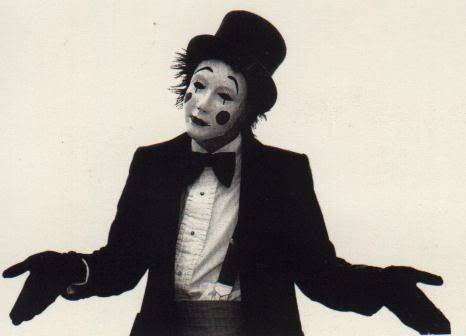
I must say, Blow Up sort of depressed me.
Intrigued me, but depressed me all the same.
Let me explain.
When it comes to living my life, I have personally already asked many questions that wrecked havoc upon my brain, although still knowing that the answers will never magically arrive. This movie reminded me of all those questions. Is this life I'm living just a game, in which I chose to participate in? Are all my friendships and contacts with other human beings just a figment of my imagination? How can I be really sure that my relationships aren't just shallow and empty, devoid of any true meaning?
Like I said, it wrecked my brain.
But then again, that's also why I enjoyed this movie. Just because I might not like the fact that something makes me uncomfortable, does not mean I don't mind the challenge it presents. I liked Blow Up because it made me look at all my relationships and the way I live my life, and I started wondering..."What game AM I playing? If I'm playing one at all?" I found it ironic that the main character was his own team, the king of his life. He played the game and he knew how to win. Of course, something came along and shook him up. The lady in the park, the dead man lying in the grass...the photograph.
The photograph was really interesting to me. It was interesting because it tied in with this theme of how you pretty much play whatever game you choose to play. The photograph had to be interpreted, it lacked any sense of "true reality". It could be the dead man in the park, or it couldn't be. It looked too much like one of his friends paintings. Without form or line. It just existed. It was just there to be interpreted as he pleased. The same with the photographer. He had to hold onto whatever reality would piece him back together, because by this time it was clear that he was trying to break out of this game he was playing.
Hence, the ending, where he finally gives in, and chooses the life he wants to live, the reality he wants to accept. He hears the tennis game between the mimes.
Sunday, November 2, 2008
Blow Up Review
Blow Up by Garrett Lambur
I truly enjoyed the movie Blowup; it was one of few recent movies that had my mind clunking away on all cylinders. But I grew quite agitated during our discussion of the movie. I felt as if we were looking at the movie completely wrong frame of mind. We had assumed a definitive view of what took place within the movie, easily dismissing any point of view that may differ from our own. While in fact, I believe that one point of the movie was to understand that our viewpoint might not always be the only one.
Quite quickly after the movie ended we began to establish as a group entity, myself included, what occurred in the movie, who shot whom, who died, where they died, etc. etc. This to me is where we made our first mistake as a group. If the director had wanted us to know who had been shot, who died, or any other details, then he/she would have easily shown that within the movie. Instead, the director focuses upon making everything that happens within the movie in relation to the pictures taken quite fuzzy and hard to understand. Why do you think that the main character had to blow up the pictures in an attempt to decipher them? He had no idea what exactly was going on.
The more and more that he studied the pictures in the movie, his orientation about that day in the park began to change. And then the as the director continues to lead you on a trail of questions leading to more questions you begin to believe you will get an answer. He finds the body in the park and rushes to go tell his friend, others will soon find the body, and then answers will start appearing. But suddenly, the pictures are gone and so is the body. You are left with nothing but a feeling of wonderment and “huh?” The director does not want you to completely understand. In fact there is a significant lack of details that will allow you formulate a clear picture of what happened. So what do you do instead? You being to create your own order of events and picture, filling in the gaps and making definitive statements, and then somebody tells you their picture of what happened and you theirs. Suddenly, each of you has to go back and start questioning the order of events and definitive statements you created, making sure you had the right information, double-checking everything. Wait, could I have been wrong?
Something that nobody wants to ever admit is that they could possibly have been wrong. Yet it is necessary I believe to completely understand the film. The film is done in such a way that each person will see it from a different perspective and only by sharing and comparing each of these perspective’s, could you come closer to truly understanding the film, although it may never be possible to completely understand the film. In fact, this idea of sharing and comparing different perspectives on the same thing is something that more people need to do today. So very few attempt to understand others view points and automatically assume that theirs is right. But it takes more than just listening to others, it takes the ability to question your own against theirs, and perhaps, just perhaps, change some of your dearly held belief or idea or whatever because you learned something.
I truly enjoyed the movie Blowup; it was one of few recent movies that had my mind clunking away on all cylinders. But I grew quite agitated during our discussion of the movie. I felt as if we were looking at the movie completely wrong frame of mind. We had assumed a definitive view of what took place within the movie, easily dismissing any point of view that may differ from our own. While in fact, I believe that one point of the movie was to understand that our viewpoint might not always be the only one.
Quite quickly after the movie ended we began to establish as a group entity, myself included, what occurred in the movie, who shot whom, who died, where they died, etc. etc. This to me is where we made our first mistake as a group. If the director had wanted us to know who had been shot, who died, or any other details, then he/she would have easily shown that within the movie. Instead, the director focuses upon making everything that happens within the movie in relation to the pictures taken quite fuzzy and hard to understand. Why do you think that the main character had to blow up the pictures in an attempt to decipher them? He had no idea what exactly was going on.
The more and more that he studied the pictures in the movie, his orientation about that day in the park began to change. And then the as the director continues to lead you on a trail of questions leading to more questions you begin to believe you will get an answer. He finds the body in the park and rushes to go tell his friend, others will soon find the body, and then answers will start appearing. But suddenly, the pictures are gone and so is the body. You are left with nothing but a feeling of wonderment and “huh?” The director does not want you to completely understand. In fact there is a significant lack of details that will allow you formulate a clear picture of what happened. So what do you do instead? You being to create your own order of events and picture, filling in the gaps and making definitive statements, and then somebody tells you their picture of what happened and you theirs. Suddenly, each of you has to go back and start questioning the order of events and definitive statements you created, making sure you had the right information, double-checking everything. Wait, could I have been wrong?
Something that nobody wants to ever admit is that they could possibly have been wrong. Yet it is necessary I believe to completely understand the film. The film is done in such a way that each person will see it from a different perspective and only by sharing and comparing each of these perspective’s, could you come closer to truly understanding the film, although it may never be possible to completely understand the film. In fact, this idea of sharing and comparing different perspectives on the same thing is something that more people need to do today. So very few attempt to understand others view points and automatically assume that theirs is right. But it takes more than just listening to others, it takes the ability to question your own against theirs, and perhaps, just perhaps, change some of your dearly held belief or idea or whatever because you learned something.
Subscribe to:
Comments (Atom)
